
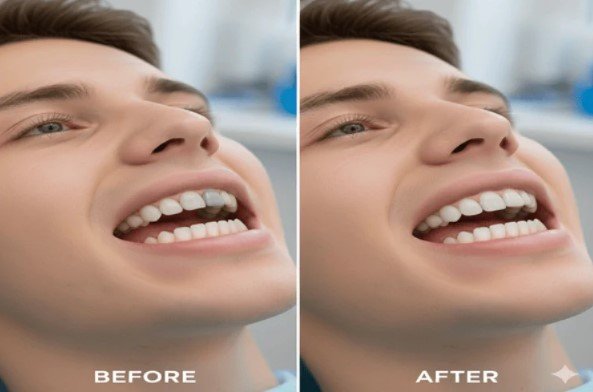
Small changes to a tooth can affect how comfortable you feel when smiling, speaking, or meeting someone new. A chipped edge, small gap, or uneven shape may seem minor, but it can still make you more aware of your teeth. Composite bonding offers a simple way to improve these small cosmetic concerns by adding tooth-coloured material to selected areas of the teeth. In this article, we look at what Composite Bonding Middlesbrough involves, the concerns it can address, and what you can expect from the treatment.
Composite bonding isn’t about changing who someone is. It’s a cosmetic dental treatment that works with the natural shape of the teeth, smoothing out the little details that can knock someone’s confidence more than they’d like to admit. For anyone researching Composite Bonding Middlesbrough, it helps to understand what the treatment actually does, who it tends to suit, and what to realistically expect once it’s done.
What Composite Bonding Actually Involves
At its core, composite bonding uses a tooth-coloured material called dental composite. This is a resin-based substance, made from fine mineralised glass particles mixed with other compounds, that can be shaped and moulded directly onto a tooth. Because it starts out soft, a dentist can sculpt it by hand before hardening it with a curing light, blending it into the surrounding teeth so it looks like it was always there.
The treatment is often described as having both a cosmetic and a functional side. That means it isn’t purely about appearance, it can also help restore some of the tooth’s structure and everyday function, depending on the problem being addressed.
Unlike more involved cosmetic work, composite bonding usually involves little to no removal of healthy enamel. That’s one reason it’s often described as a conservative option, the natural tooth stays largely intact, with the composite simply added and shaped on top.
Small Problems It’s Commonly Used to Address
People tend to seek out Composite Bonding Middlesbrough for fairly specific, everyday concerns rather than major dental issues. Common reasons include:
- Chipped or slightly cracked front teeth
- Small gaps between teeth
- Teeth that look uneven or slightly misshapen
- Superficial staining or mild discolouration
- Teeth that appear a little short or worn at the edges
These are the kinds of things that might not bother a dentist clinically but can genuinely affect how confident someone feels smiling in photos, at work, or on a first date. Composite bonding tends to work best on these smaller, cosmetic concerns rather than on teeth with significant structural damage.
Who Tends to Suit This Treatment
Not every tooth is a good candidate for bonding, and that’s worth being upfront about. Healthy teeth and gums are usually a starting requirement, bonding isn’t designed to fix underlying decay or gum disease, and those issues usually need to be dealt with first.
Suitability is worked out during an oral evaluation, where the dentist looks at:
- The overall health of the teeth and gums
- How severe the cosmetic concern actually is
- What the patient specifically wants to achieve
- Whether the issue might be better suited to another treatment
For more complex problems, significant misalignment, extensive decay, or heavy structural damage, a different approach may be recommended instead of composite bonding. This is a normal part of the assessment rather than a sign that bonding has failed to help.
Composite Bonding Compared With Other Options
It’s easy to lump cosmetic dental treatments together, but they’re built to do different jobs. The table below sets out how composite bonding generally compares with porcelain veneers and a standard filling.
| Feature | Composite Bonding | Porcelain Veneers | Standard Filling |
| Main purpose | Cosmetic improvement and minor repairs | More extensive cosmetic change | Treating decay or structural damage |
| Material | Tooth-coloured composite resin | Porcelain or ceramic | Composite resin or other filling material |
| Tooth preparation | Usually little or no enamel removed | Enamel is typically reduced | Decayed tissue is removed first |
| Appointments needed | Often completed in one visit | Usually at least two visits | Usually one visit |
| Typical lifespan | Around 5 to 10 years with good care | Around 12 to 15 years with good care | Varies by size and location of filling |
| Reversibility | Generally more reversible | Less reversible once prepared | Not typically reversible |
These figures are general expectations rather than guarantees, since individual results depend on the tooth, the patient’s habits, and ongoing care.
Inside a Typical Bonding Appointment
For anyone nervous about what the treatment actually involves, the process is fairly straightforward. It usually starts with a consultation, where the dentist carries out a full oral examination and may use X-rays or digital imaging to understand the tooth in more detail before planning treatment.
From there, the composite bonding process generally follows this pattern:
- A bonding agent is applied to the tooth surface to help the composite stick properly.
- The soft composite material is applied and hand-shaped to match the surrounding teeth.
- A curing light hardens the composite so it sets into its final shape.
- The dentist checks the bite and polishes the surface for a natural finish.
Because each restoration is sculpted and colour-matched by hand, no two treatments look identical, the composite is built around the person’s own teeth, facial features, and what they’re hoping to achieve, rather than being a one-size-fits-all fix.
How Long the Results Tend to Last
One of the most common questions about Composite Bonding Middlesbrough is simply how long it will last before it needs attention again. Composite bonding may last around 5 to 10 years with excellent oral hygiene and proper maintenance, though this depends heavily on individual habits.
Several everyday factors influence how long bonding holds up:
- Oral hygiene: Regular brushing and flossing help protect the edges of the bonded tooth.
- Diet: Sugary or acidic foods, along with frequent snacking, can affect the area around the restoration over time.
- Staining habits: Coffee, tea, red wine, and smoking can gradually dull or discolour composite more than natural enamel.
- Teeth grinding: Clenching or grinding puts extra pressure on bonded teeth and can shorten their lifespan.
- Biting habits: Using teeth to bite nails, chew pens, or open packaging can chip or wear composite down faster.
None of these guarantee a set lifespan on their own, but together they give a realistic picture of why some people get years more wear out of their bonding than others.
Looking After Bonded Teeth Day to Day
Composite bonding doesn’t need a complicated aftercare routine, but a few sensible habits go a long way. Brushing twice a day, keeping up with regular dental check-ups, and being mindful of very hard foods in the days after treatment can all help the bonding settle and last well.
Over time, polishing can freshen up the surface if it starts to look a little dull, and minor chips or wear can often be repaired without needing to start the whole treatment again. This is one of the practical advantages of composite over some other cosmetic options, small issues are generally easier to touch up.
When Something Else Might Be a Better Fit
Composite bonding isn’t automatically the right choice for every situation, and a good consultation should be honest about that. Where teeth have more significant staining, larger structural damage, or a patient wants a more dramatic and long-lasting change, porcelain veneers might be discussed instead. Veneers are custom-made outside the practice and bonded into place, and while they generally take longer to complete, they tend to be more resistant to staining and can last longer with proper care.
For genuine decay, a standard filling remains the more appropriate treatment, since bonding is designed for cosmetic and minor structural concerns rather than replacing lost tooth structure from decay. Similarly, where the real issue is tooth position or alignment, orthodontic treatment may be worth considering before or instead of bonding.
A short consultation is usually enough to work out which route makes the most sense for a particular smile.
Why People Notice a Difference in More Than Just Photos
The appeal of Composite Bonding Middlesbrough often isn’t really about the teeth themselves, it’s about what changes afterwards. People who’ve been quietly covering their mouth when they laugh, or avoiding close-up photos, often say the biggest shift is simply forgetting to think about it. Smiling stops being something to manage.
Because the treatment is relatively quick, conservative, and doesn’t involve major changes to the natural tooth, it tends to suit people who want a noticeable improvement without a lengthy or invasive process. It’s a modest treatment with an effect that often reaches further than the mirror.
Getting a Consultation
Anyone considering Composite Bonding Middlesbrough is generally best starting with a consultation, where the dentist can look at the teeth in question and talk through whether bonding is a suitable option.
Get in Touch:
- Address: Westmount Dental Surgery 131–133 Acklam Road, Middlesbrough, TS5 5HR
- Call: 01642 850011
- Website: westmountdentalsurgery.co.uk