
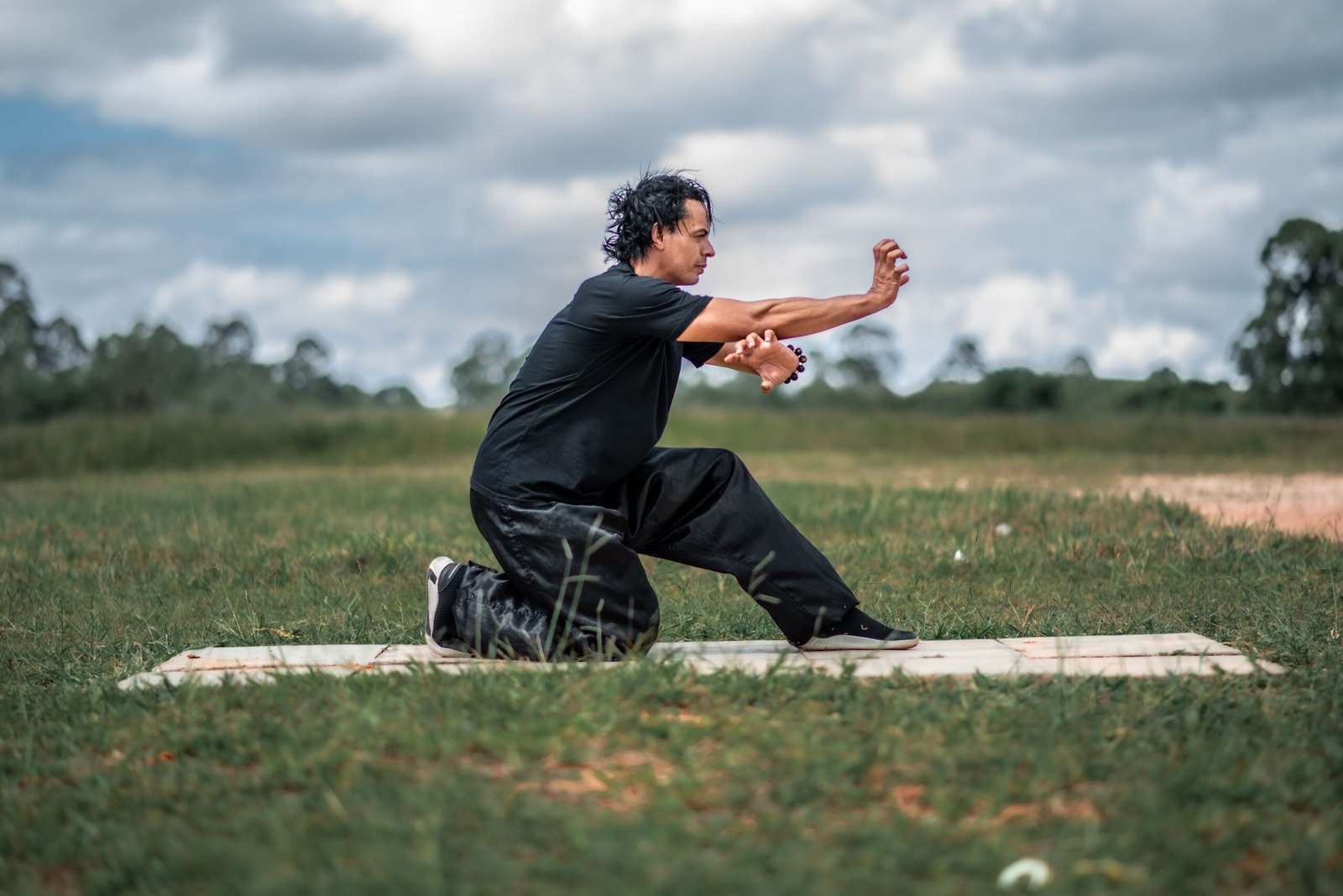
The first tai chi session can feel surprisingly full: unfamiliar movements, new names and the challenge of moving slowly without rushing ahead. A regular practice does not require mastering all of that at once. It grows from a simple question: what would make it easy to return next week? For people fitting classes around work, family or changing weather in Australia, the most useful routine is often modest, flexible and close to everyday life.
Begin with curiosity, not a performance goal
In your first session, focus on the instructor’s guidance rather than trying to remember an entire sequence. Notice where your feet are, how your weight shifts and whether you can move without holding your breath. You do not need to copy every detail immediately. A beginner class should leave room to ask questions and work within a comfortable range of movement.
- Wear clothing that lets you move freely and footwear suited to the surface and the instructor’s advice.
- Tell the instructor about any movement concerns so they can suggest appropriate adjustments.
- Choose one small detail to remember, such as a starting position or a cue to slow down.
If you have a health condition, recent injury or uncertainty about exercise, seek advice from a qualified health professional before starting. During class, do not push through pain or dizziness. Adjusting a movement, resting or stopping is a sensible part of learning, not a failure to keep up.
Make the next session easy to attend
Consistency begins with logistics. Pick a class time you can usually reach without turning the rest of your day into a scramble. Consider the journey, parking or public transport, and the extra time needed to settle in. If you practise outdoors, have an indoor alternative for hot days, rain or poor air quality. A reliable plan is more useful than an ambitious one you rarely follow.
Attach practice to an existing habit
Between classes, try a brief review after something you already do, such as making morning tea or finishing a walk. You might rehearse one familiar movement for a few minutes rather than run through everything you have seen. Keep the space clear and the pace comfortable. The point is to make returning to the movement feel ordinary, not to add another demanding task.
Plan for uneven weeks
Travel, deadlines and family responsibilities can interrupt any routine. Decide in advance what a smaller version of practice looks like: attending class without practising at home, reviewing a single posture or simply booking the next session. Missing a week need not become a verdict on your commitment. Resume with material you know, and ask your instructor where to rejoin.
Choose guidance that fits your stage
Some people enjoy learning in a neighbourhood group; others prefer a structured course or occasional focused instruction. Whatever the format, look for clear teaching, a welcoming approach to beginners and opportunities to ask about modifications. An instructor should be able to explain what you are practising without pressuring you to move beyond your comfort or treating every student’s needs as identical.
As your interest develops, tai chi workshops can offer a way to explore a particular style, sequence or teaching approach. Check the intended experience level, location, accessibility and schedule before booking. A workshop can complement a weekly class, but it need not replace the steady practice that helps you remember what you learn.
Give your home practice a shape
It is easier to begin when you know exactly what you intend to do. Ask your instructor which movements are suitable to practise independently, especially if a sequence is new. Then keep your home session simple enough that you can finish it without consulting a long list of instructions. Quality of attention matters more than squeezing in extra repetitions.
- Prepare: Clear enough space to move without obstacles, choose a stable surface and take a moment to notice how you feel.
- Practise: Revisit a short section you recognise. Move at a pace that allows you to stay aware of balance and comfort.
- Reflect: Note one question for your next class. Avoid judging the whole session by whether the movement looked polished.
On days when energy or concentration is limited, shorten the session rather than trying to force your usual plan. If a movement consistently feels uncomfortable, leave it out until you can discuss it with your instructor. Home practice should support learning, not become a test you must pass alone.
Let the routine change as you do
After several weeks, ask what is working. Perhaps the class time suits you, but home practice needs a different slot. Perhaps a friend makes attendance easier, or a quieter space helps you concentrate. Keep the useful parts and revise the rest. Progress may show up as recognising cues, remembering a short sequence or feeling more at ease with being a beginner; it does not have to follow a fixed timetable.
Regular practice is built through many ordinary returns. Start with a manageable class, revisit a little of what you learn and make room for interruptions. Over time, the routine can become familiar enough to fit your life rather than compete with it.