
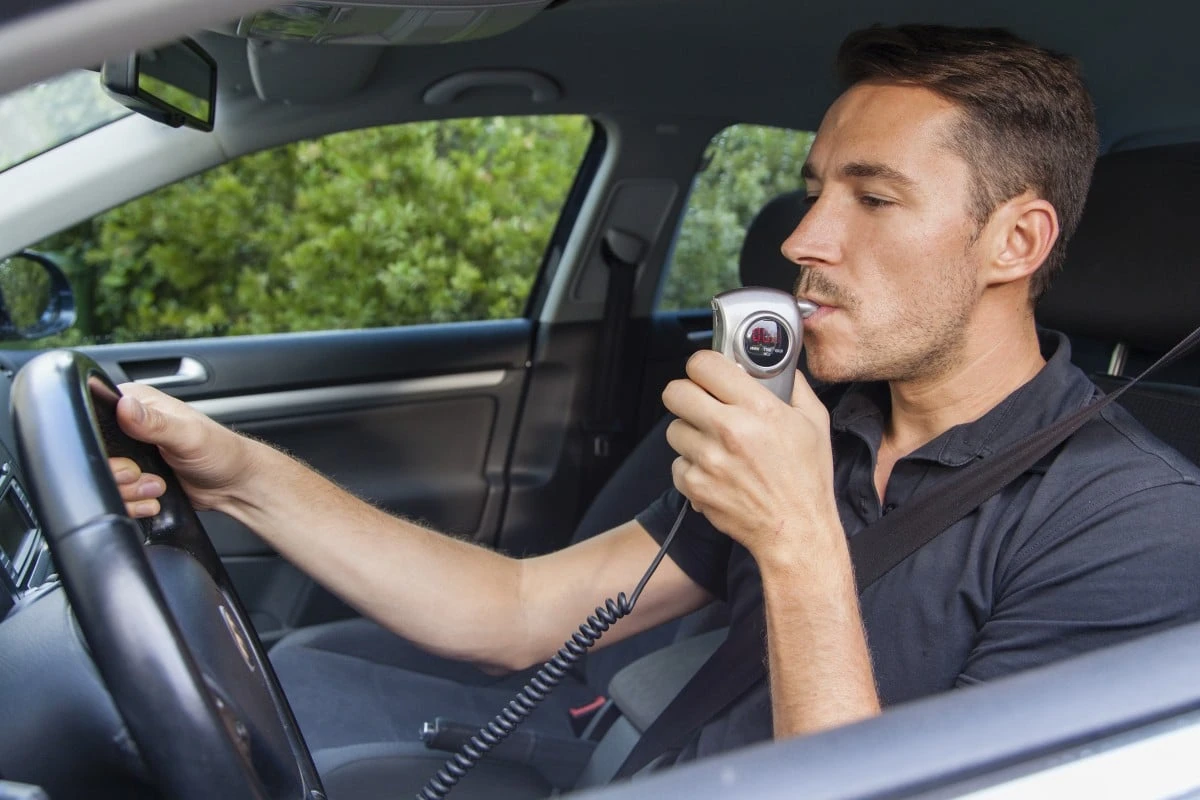
Programs of Ignition Interlock (II) are at the crossroads of, (1) criminal sentences; (2) administrative actions as to licensing; and (3) consumer hardware. As a result, lawyers who advise people as to IIs need considerably more than an overview of said hardware as such. Here follows a three-part overview, (1) a description of II’s sensors; (2) the manner in which said hardware measures up against expected levels of compliance; and (3) a review of the various key elements that, singly or in combination, end up extending the time needed to complete the full term of II.
The sensor and what it actually measures
The sensing mechanism for the majority of state-certified ignition interlock devices (IIDs) on the market today is a fuel cell sensor. These types of sensors use a breath sample that passes over an electrode where ethanol in the sample oxidizes to create a current that is directly proportional to the amount of alcohol in the breath sample. This current is then converted to a number that represents a person’s Breath Alcohol Concentration (BAC). The BAC number is then compared against a pre-programmed “lockout” number set by the IID, which is typically set for a.02% or.025% BAC for most drivers;.04% or.06% for commercial drivers; and.01% for underage drivers.
The fact that semiconductor sensors could cross test for a number of different airborne toxins or volatiles makes them generally unsuitable for use in personal breath testing or interlock systems designed for court-ordered use. As such, clients’ claims of positive test results caused by mouthwash or by the effects of diabetic ketones should receive healthy doses of skepticism by work overload victims counseling assistance personnel.
Anti-circumvention features
All of the certified ignition interlock systems have been designed with cheating in mind and therefore have numerous methods to detect tampering with the unit.
- Breath pattern requirements, such as a hum, inhale-exhale sequence, or pressure variation that a bystander or air source cannot easily reproduce
- Camera capture at each test, time-stamped and matched to the vehicle’s data log
- Tamper detection on the wiring harness and on the handset housing
- Rolling retests that make driver substitution impractical over a full trip
How the device fits into a post-DUI license
As a condition of a restricted or revoked license, a person’s ability to drive at all while an interlock is installed is limited to driving legally while the interlock is installed, calibrated and able to report to the appropriate party. Typically this is done on a set schedule, usually every 30 to 60 days where service and download of all data are reported to the licensing authority or court where the case is being supervised.
The majority of failures occur because individuals miss their service dates. Most Ignition Interlock Devices can be configured to lock out permanently for a service miss. The individual then needs to call for a tow or have the service technician come out to unlock the interlock. Missed service appointments also result in violations which negatively affect the client’s completion.
Violation handling and extension triggers
Note that most jurisdictions list out the violations and corresponding length of time that can be added on to your term of interlock in advance, so it is easy to inform your clients of what to avoid to complete their term of interlock on time.
| Event type | Typical device response | Common program consequence |
| Startup test above threshold | Start prevented, short lockout timer | Logged; repeated events extend the term |
| Failed rolling retest | Horn and lights alert until vehicle stops | Reported as a violation, often reviewable |
| Skipped rolling retest | Alert sequence, event logged | Treated similarly to a failed retest in many states |
| Missed calibration | Permanent lockout after grace period | Service visit required, possible noncompliance report |
| Tamper or power disconnect | Flagged in data log | Frequently grounds for immediate removal from program |
What daily operation involves
A typical routine that an individual is expected to follow is to provide a breath sample to start the car. He or she is then expected to complete various “re-tests” while operating the vehicle. The majority of states allow for these tests to be administered while driving, however for safety reasons it is best to pull over to complete the test as long as it is done within the given time frame for the sample.
Other potential problems associated with drivers’ being subjected to interlock devices should also be explained to them. Cold weather can make the interlock’s sensor slow to wake up. In some cases, drivers who consume energy drinks, protein supplements and even oral health mouth sprays could have mouth alcohol left in their mouths for up to 15 minutes after use. Drivers with vehicles equipped with automatic stop-start systems as well as those who leave their vehicles with remote start systems should have their devices programmed in advance for proper installation.
Choosing and working with a provider
We typically refer our clients to go to a website such as “ignition interlock devices near me” to look for installers in their area. Once they get a list of all of the installation companies in their area, they need to check to see if that installer is listed on the website of the agency that certified the device (i.e. Their state licensing authority). Southern California clients, for instance, are usually best served by booking with an established ignition interlock device San Diego provider that handles state reporting in-house. After that, they can compare the various service centers, hours of appointment, and whether or not lockout assistance is included in their fee or not.
- Confirm certification for the specific state and offense category
- Check how many service centers sit within a reasonable radius of home or work
- Ask what the monitoring report contains and whether the client can review it before submission
- Clarify install, monthly lease, calibration, lockout, and removal charges as separate line items
Advising clients through the term
Documentation of services, for example, service receipts, records of mechanical problems, or of medical problems which caused failures for whatever reason, can be very important in documenting downloads and reproducing any reported problem. By reminding the client of this material at the outset, much heartache can be avoided later.